Trade show exhibits are the branded structures companies build on an exhibition floor to meet buyers, show products and collect leads. The right exhibit depends on your goals, your target audience, your budget and how often you exhibit. A pop-up display can be enough for a first fair. A custom-built booth makes sense when the show is central to your sales year.
Most advice online comes from US display companies, priced in dollars and shipped from overseas. That rarely matches how a trade fair works in Abidjan, Dakar, Accra or Lagos. This guide answers six practical questions, with figures from our own builds as a custom exhibition stand builder in Abidjan. If the vocabulary is new, start with what an exhibition stand is, and note that a booth and a stand are the same thing under two names.
A good exhibit is a business tool, not a decoration. It has to attract attendees, support your team and give clients a clear reason to talk to you. The sections below follow the questions we hear most often from exhibitors: which options exist, how to design a booth, which displays work best, how to draw visitors, what an exhibit really is and what it costs.
What are trade show exhibit options?
There are four main trade show exhibit options: portable display kits, modular exhibits, custom-built exhibits and reused exhibits from storage. Each one trades price, flexibility and impact differently. Our complete guide to the types of exhibition stands goes deeper, including island and double-deck formats. Here is the short version.
- Portable display kits. A retractable banner, a booth portable backwall display or a tension fabric frame packs into a case and sets up in minutes. Custom printed graphics swap in for each show. This is the entry point for companies that exhibit a few times a year.
- Modular exhibits. Custom modular systems use a truss or aluminium frame that reconfigures from a small inline booth to a larger island. Modular trade booth kits suit teams that move between shows and want the choice between rental and purchase.
- Custom-built exhibits. A custom trade show booth is designed around your brand and built to measure. It carries the most impact and has the highest sale price.
- Reused exhibits. A stand kept in storage can be refreshed with new graphics, which spreads the cost over several shows.
Whatever you choose, ask about finishes. A backlit trade show display or a led lightbox display wall gives strong visibility in a busy hall, and eco friendly materials such as recycled fabric or reusable timber frames cut waste. We explain where timber works and where it does not in the case for timber. Our local crews in Ivory Coast, Senegal, Ghana and Nigeria build the full range on the ground, with no cross-border freight.
To choose between them, ask how many shows you attend each year, how much storage space you have and how much a distinctive look matters to your brand. One show a year with a strong design brief usually points to a custom build. Five shows a year in different cities often points to a modular system you can reconfigure.
How to design a trade show booth?
Good trade show booth design starts with one goal, one target audience and one brand message, then turns them into a plan the hall will approve. Creative ideas come second. Skipping this order is how companies end up with a beautiful stand that does not generate leads.
- Set the goal. Lead generation, a product launch and brand awareness each call for a different layout. A lead capture booth needs counters and demo points. A brand booth needs open space and a strong backdrop.
- Read the hall rules. Height limits, rigging, power and fire rules vary from one venue to another, whether it is a convention center in Las Vegas or a hall in Abidjan. Read the exhibitor manual before drawing anything.
- Brief your design services partner. Trade show design companies need your footprint, budget, show dates and brand files. Our brief template that gets you a quote in 48 hours lists exactly what to send.
- Sign off drawings first. Scale drawings, 3D renders and a materials list let you approve the stand before anyone cuts a board. We describe this method in drawing first, building second.
- Plan the graphics. Graphic design, custom graphics, signage and backdrops carry your message from the aisle. Keep one headline, one image and one call to action. Custom printing on tension fabric gives a clean finish, and you can customize 10ft inline panels to reuse at later shows.
- Add interactive moments. A demo, a screen, a tasting or a virtual reality headset gives visitors a reason to engage and leaves a lasting impression.
Before you sign with any builder, run through five questions to ask any stand builder. It takes ten minutes and protects the whole project.
What are the best trade show displays?
The best trade show displays match your goal, fit your budget and can be read from ten metres away. A high quality trade show booth does three jobs: it announces who you are, it invites people in and it gives your team space to talk.
Some trade show display ideas that work consistently:
- Backlit displays. A backlit trade show display or led lightbox wall makes graphics glow and stands out on a crowded trade show floor.
- Counters and product plinths. A display with counters gives your team a natural place to welcome visitors and capture leads.
- Portable trade show booth displays. A trade show display kit with banner stands, a fabric backwall and a table is the most affordable exhibit display for small budgets.
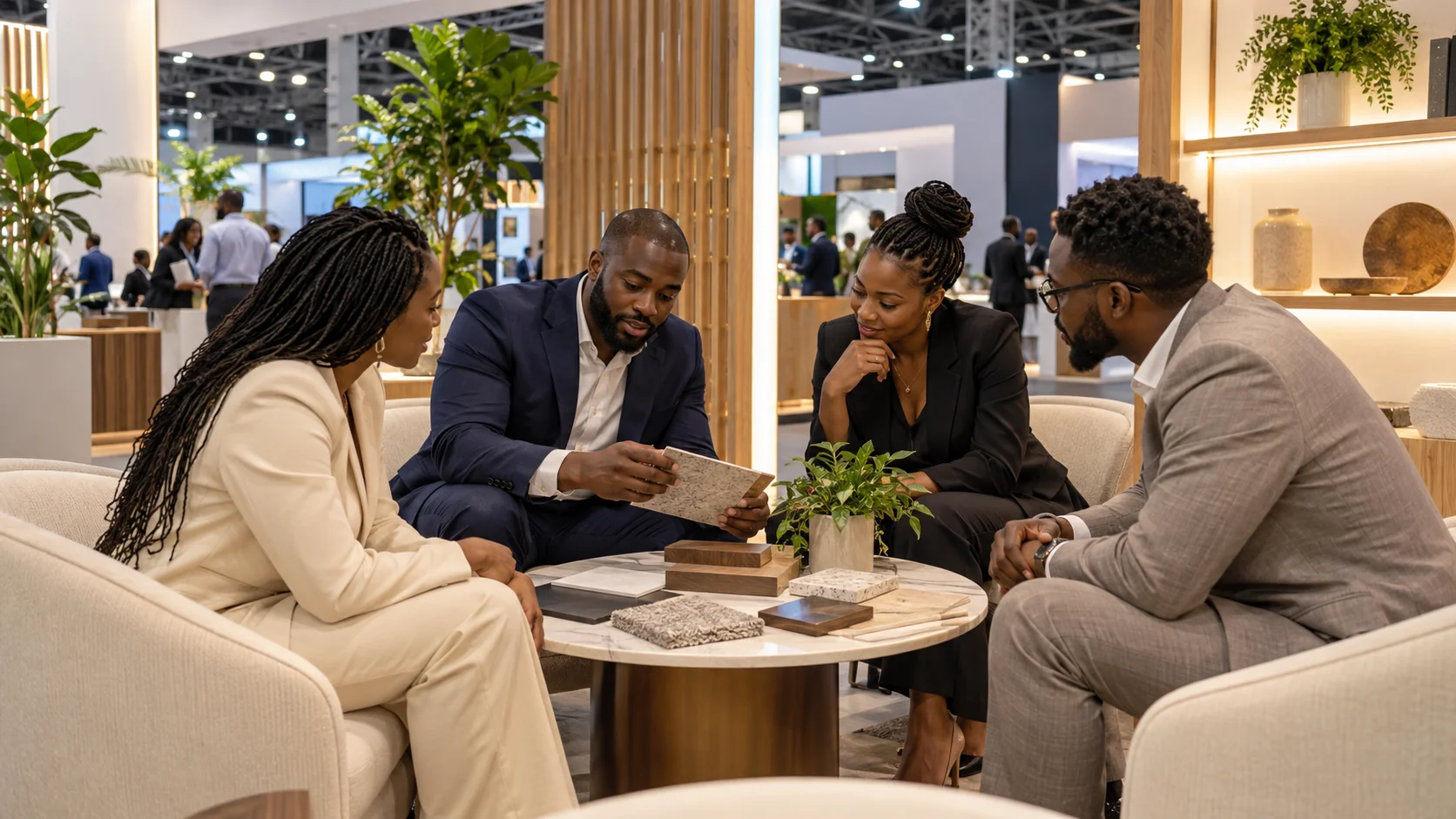
- Open lounges. A quiet seating area lets buyers talk without the noise of the aisle.
- Display kits for repeat shows. Buy once and reconfigure for each trade fair.
When you search for trade show booth images or trade show royalty-free images for inspiration, treat them as mood boards, not specifications. A render made for a stock photo rarely accounts for your footprint or local hall rules. Real tradeshow booth projects teach more: see three days at SARA 2025 for what we learned on the floor, and eight cities, one finish for how we keep the same quality across countries.
Lighting and traffic flow matter as much as the structure. Light your product, not the ceiling, and keep one clear entrance so visitors can step in without squeezing past a counter. Plan storage behind the walls for boxes, brochures and coats, so the front of the stand stays clean all day.
How to attract visitors to a trade show?
To attract visitors to a trade show, start promoting before the doors open, then give people a reason to stop at your booth once they arrive. The floor is crowded, so the marketing work starts weeks before.
Before the show, email your client list and potential clients with your booth number and one reason to visit, such as a demo or a meeting slot. Post on social media with the show hashtag and add the stand to your newsletter. Many organisers also list exhibitors online, so complete your profile.
On the show floor, creative booths win attention in three seconds. A bold backdrop, a moving display and clear signage help visitors understand what you do before they reach you. Interactive elements such as a quiz, a product trial or a game increase engagement and keep people longer. Promotional items work best when they are useful and tied to a conversation, not handed out at random.
After the show, follow up within a week. Share trade show booth images and short clips on social media to extend your reach, and write to each lead about what you discussed. The aim is to maximize engagement before, during and after the event. For shows that span several markets, our note on planning a multi-country activation across West Africa covers timing and logistics.
What is a trade show exhibit?
A trade show exhibit is a temporary, branded display that a company sets up at a trade show or exhibition to present products, meet visitors and generate leads. It can be as simple as a table and a banner or as elaborate as a two-storey structure with meeting rooms.
The words overlap. A trade show, trade fair, expo, convention and exhibition all describe an event where companies show their work to an industry audience. A book fair or an international book fair follows the same logic for publishers. At these events, an exhibit, a booth, a stand and a display are usually the same thing, although exhibit often implies the full designed environment while display can mean only the graphic elements. We unpack the vocabulary in exhibition stand vs trade show booth.
A complete exhibit usually includes a structure, graphics, furniture, lighting, power, storage space and a plan for logistics on build and dismantle days. Our guide to the trade show booth covers ideas, buying and supplies in more detail.
Companies exhibit for three reasons: to meet potential clients in one place, to launch or demonstrate a product in person, and to learn what the industry and competitors are doing. A well-run exhibit turns a three-day show into months of pipeline, which is why many businesses treat it as a core marketing program rather than a one-off cost.
What are the costs of trade show displays?
Trade show displays cost from about $500 for a pop-up kit to 600 € per m² (about $648 or XOF 393,600) for a custom build in West Africa, all taxes included. A 12 m² custom stand therefore starts around 7,200 €. Country, finish and timing move the figure.
Several levers change the sale price or the rental price:
- Size. Cost scales with footprint, from 6 m² up to 48 m² on our standard range.
- Finish. A graphic finish adds about 60 € per m².
- Timing. The baseline lead time is 14 days from signed brief to raise day, plus 2 days outside Ivory Coast. A rush build adds 15 percent.
- Ownership. Buying suits repeat exhibitors. Rental suits one-off events and removes storage costs.
- Extras. Travel, venue fees, power connections, storage and logistics are billed separately, so build them into your budget from the start.
To keep the budget under control, set a ceiling per square metre before you brief a builder, decide which items are essential and which are options, and ask for an itemised quote. Reusing the structure and changing only the graphics is the simplest way to cut cost on a second show, and a clear brief reduces the revisions where hidden costs tend to appear. To see where each euro goes, read what a 12 m² stand really costs, line by line, where we open the books on a recent build. When you are ready, file a brief on our home page. We reply within four business hours, send an indicative quote within 48 hours and a structured proposal within five working days. Agencies subcontracting stand builds in West Africa can also review our partner terms.